A smart website with SEO built in.
Your website is where Google sends people and where they decide. Built for your trade, with a page for every job and every town, your real photos and your reviews, and a call button that never leaves the screen.
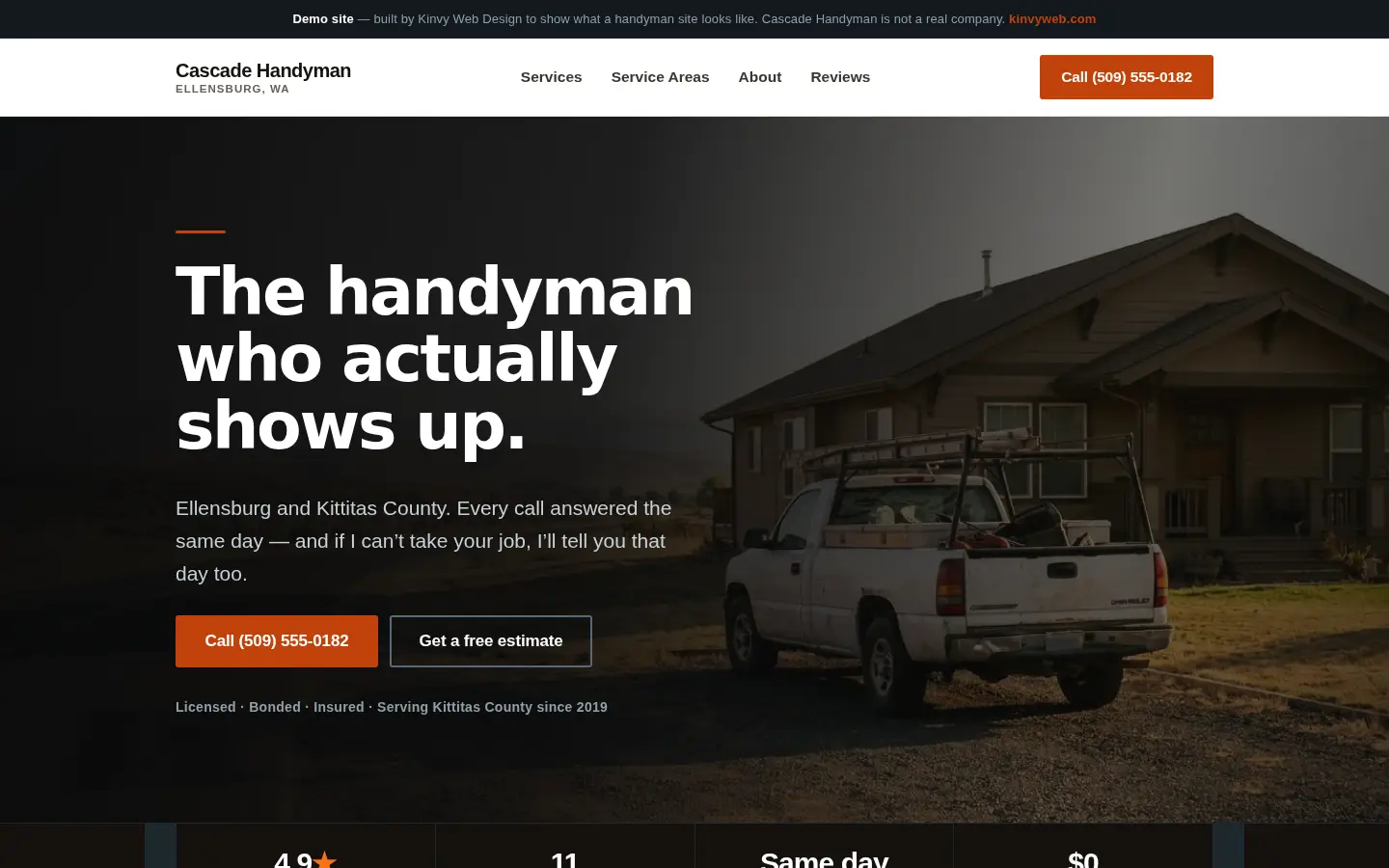
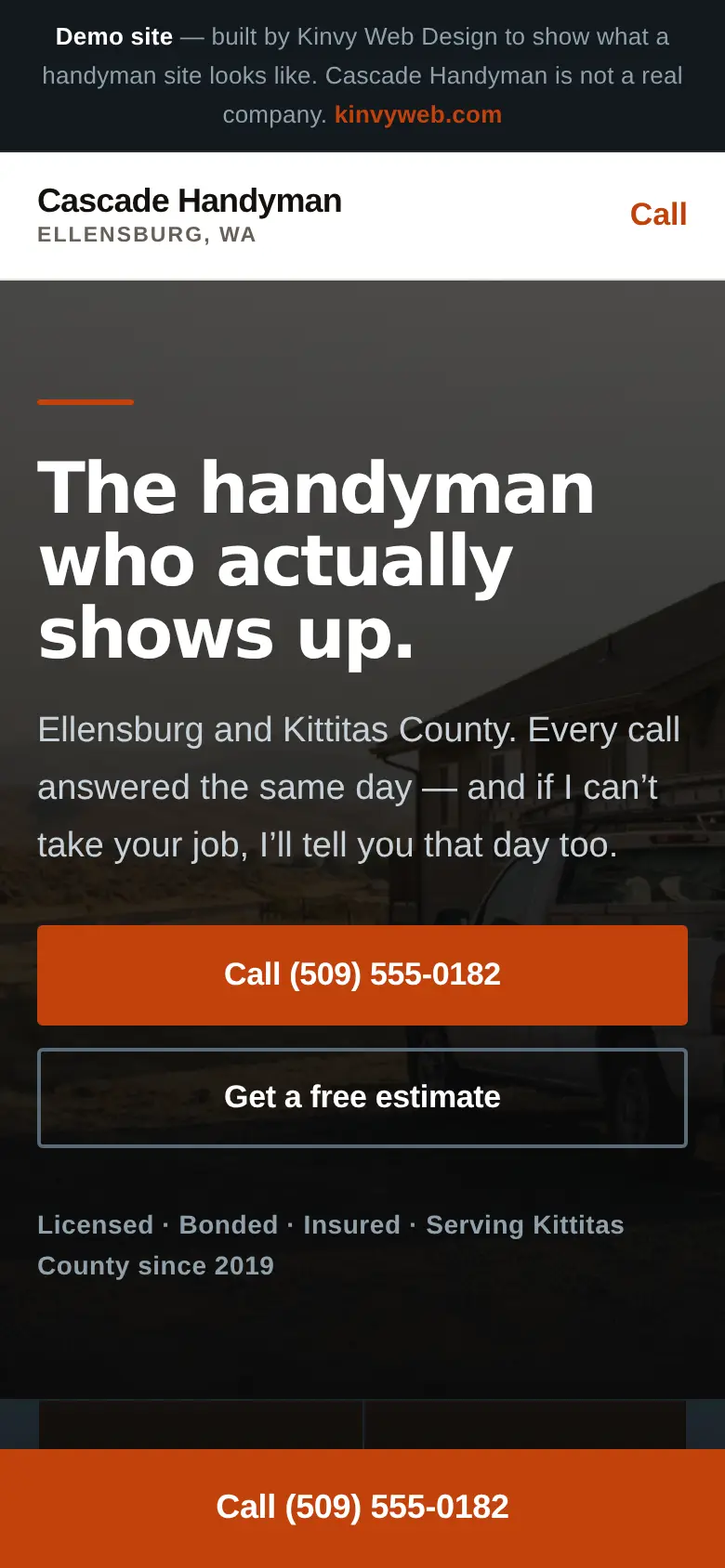
Built to be found, picked and called.
It's built to be found
A page for every job you do and every town you work in, written as real text, fast on phone data, and connected to Google Search Console. That's what Google reads when it decides whose site to show.
It's built to be picked
Photos of your actual work, your Google reviews, your licence number, bond and insurance. People compare three sites in about a minute. Most of your competitors show none of it.
It's built to be tapped
A phone number that dials when you touch it, in the header, in the first screenful and on a bar fixed to the bottom, plus an estimate form on every page that lands in your app.
Drag it. Which one would you call?
The SEO part, in plain English. Getting found is three things.
The map at the top
Those three businesses with the little map. That's where the money is, and it's driven mostly by your Google Business Profile. That's why the listing is part of the plan, not an extra.
The links underneath
Regular search results come from your website, and that's the Google SEO part. The service pages, the town pages, how fast it loads. It's a different system from the map. You can be top of one and invisible in the other, so the site is built for both.
Reviews, which feed both
The thing with the most evidence behind it. It's why the review engine is part of the plan. It's part of getting found, not a separate product.
What working with me looks like.
We talk
I ask what you do, where you work, and what shows up when someone searches for you. You ask me anything. If it's not a fit I'll say so.
You send me a short form
Your services, your towns, your hours, some photos of your work. Then I build the site and set the system up. You do nothing.
We go live
I walk you round it, show you where the leads land, and you call your own number so you see what a customer sees. That's it.
The things people actually ask.
Do I own the website?
Your domain is yours. If you already have one it stays in your name, and if you don't I register it in your business's name. The site itself is built and hosted on my system, which is part of why it's a monthly plan instead of a big bill up front. If you cancel, the domain goes with you.
What happens if I cancel?
You text me and it stops at the end of the month. No cancellation call, no retention offer. The domain is yours and goes with you.
Can I change things later?
Text me. New photo, new price, a service you've dropped. Live by the next business day, no invoice, no ticket system.
How long until I'm on page one of Google?
I don't know, and neither does anyone who tells you they do. Backcountry Excavation's site went from nothing on Google to page one for its main search in about two months. That's one business, not a promise. What I can promise is the work, done properly and kept up.
Why only 5 to 15 town pages?
Because Google penalises sites that spin up hundreds of near-identical pages with the town name swapped. It's called scaled content abuse and it's the fastest way to wreck a site. Each of your town pages gets something only true of that town.
Is this the same as the AI search thing everyone's on about?
Mostly, yes. A complete Google listing, real reviews, and pages a machine can actually read. Backcountry Excavation was the first business named in Google's AI answer for its main search, off exactly that work. One business, not a promise.
Google SEO
A page for every service and every town you work in.
IncludedGoogle Business Profile
Set up right, so the map sends you calls.
IncludedReview Engine
Every finished customer gets asked. One reminder, then it stops.
Add-onMissed Call Text Back
They get a text in seconds. Part of the Lead Saver add-on.